Welcome:
Language:
 ∷

∷
 ∷

An air shower may appear to be a simple system that blows air through nozzles, but its performance depends on several factors, including fan capability, duct design, HEPA filter resistance, nozzle arrangement, and operating noise.
An improperly selected fan may deliver insufficient airflow at the nozzles, create uneven air distribution, increase system noise, or consume more power than necessary—even when its advertised maximum airflow appears sufficient.
So, how should a centrifugal fan be selected for an air shower nozzle duct system? And how can a source manufacturer help equipment builders address these challenges through structural design, impeller manufacturing, dynamic balancing, and application-specific fan selection?
Shenzhen JENTECH Electronics Co., Ltd. specializes in cooling fans and industrial thermal management solutions. This article explains the key considerations for air shower fan selection and discusses the value of manufacturing expertise and technical support when matching centrifugal fans to real operating conditions.
Air showers typically use a fan to move air through a filtration system before directing it through nozzles installed on the side walls, ceiling, or other designated locations. The resulting airflow helps remove particles from the surfaces of people or objects passing through the chamber.
To achieve the required airflow, the fan must overcome resistance throughout the system.
The main sources of resistance include:
HEPA filters: Air passing through filter media experiences a pressure drop. Filter resistance may also change as the filter accumulates particles or approaches the end of its service life.
Intake openings and ducts: Duct bends, grilles, contractions, expansions, and other local flow restrictions contribute to pressure loss.
Nozzle design: The number, diameter, distribution, and geometry of the nozzles affect both total airflow demand and airflow distribution.
Equipment layout: Available installation space, inlet and outlet orientation, and internal component placement can influence fan performance.
For these reasons, selecting an air shower fan simply by choosing the model with the highest maximum airflow is not a reliable approach.
If the fan cannot provide sufficient pressure against the system resistance, the airflow delivered through the filter and nozzles may fall below the design target. Conversely, excessive fan capacity may increase noise, power consumption, and airflow control requirements.
The objective is not to maximize airflow under every condition. It is to select a fan that can deliver the required airflow at the actual system operating point.
Unlike an open-air ventilation application, an air shower typically contains filters, internal ducts, and multiple nozzles. The fan must overcome the resistance of these components to maintain the required airflow.
A centrifugal fan transfers energy to the air through a rotating impeller and changes the direction of airflow. This design can be suitable for ducted air delivery applications, provided that the fan's performance characteristics match the system requirements.
During selection, equipment designers should evaluate the following parameters.
| Selection Parameter | What to Evaluate | Impact on Air Shower Performance |
|---|---|---|
| Airflow | Airflow available at the actual operating point | Determines the total air delivered to the nozzles |
| Static pressure | Ability to overcome filter, duct, and nozzle resistance | Affects the system's actual airflow delivery |
| Fan performance curve | Relationship between airflow and pressure | Helps confirm whether the fan matches the system |
| Power consumption | Electrical power required at the operating point | Influences long-term operating costs |
| Noise level | Fan noise and airflow-related noise | Affects the overall user experience |
| Dimensions | Compatibility with the available installation space | Influences equipment layout and maintenance |
| Speed control | Compatibility with PWM or other control methods | Supports airflow adjustment when required |
An important point: a fan's maximum airflow and maximum static pressure are generally measured at different operating conditions. They should not be treated as if they occur simultaneously.
A more reliable method is to compare the complete fan performance curve with the system resistance curve and confirm that the resulting operating point meets the design requirements.

For air shower manufacturers, a fan is more than a purchased component. Its dimensions, airflow performance, vibration characteristics, and compatibility with the duct system can all affect equipment design and long-term operation.
Working with a manufacturer that has relevant production capabilities and technical support can help identify structural and performance issues earlier in the development process.
Shenzhen JENTECH Electronics Co., Ltd. specializes in cooling fans and industrial thermal management solutions. When evaluating centrifugal fans for ducted airflow applications, equipment builders should consider several important manufacturing and quality-control factors.
Tooling and structural design influence fan dimensions, impeller and housing compatibility, inlet and outlet orientation, and mounting interfaces.
In an air shower application, the fan must fit the available installation space while also meeting duct connection, airflow, and maintenance requirements.
Even if a fan's performance specifications appear suitable, a mismatch between the fan and the equipment structure can complicate assembly and affect airflow conditions.
During the design stage, confirm:
Overall fan dimensions and mounting-hole positions
Inlet and outlet orientation and duct interfaces
Required clearance for the impeller and housing
Cable routing, control interfaces, and maintenance access
Whether a standard model or a customized structural solution is appropriate
For equipment manufacturers with ongoing production requirements, it is also worth comparing standard models with customized solutions in terms of cost, lead time, and maintenance convenience.
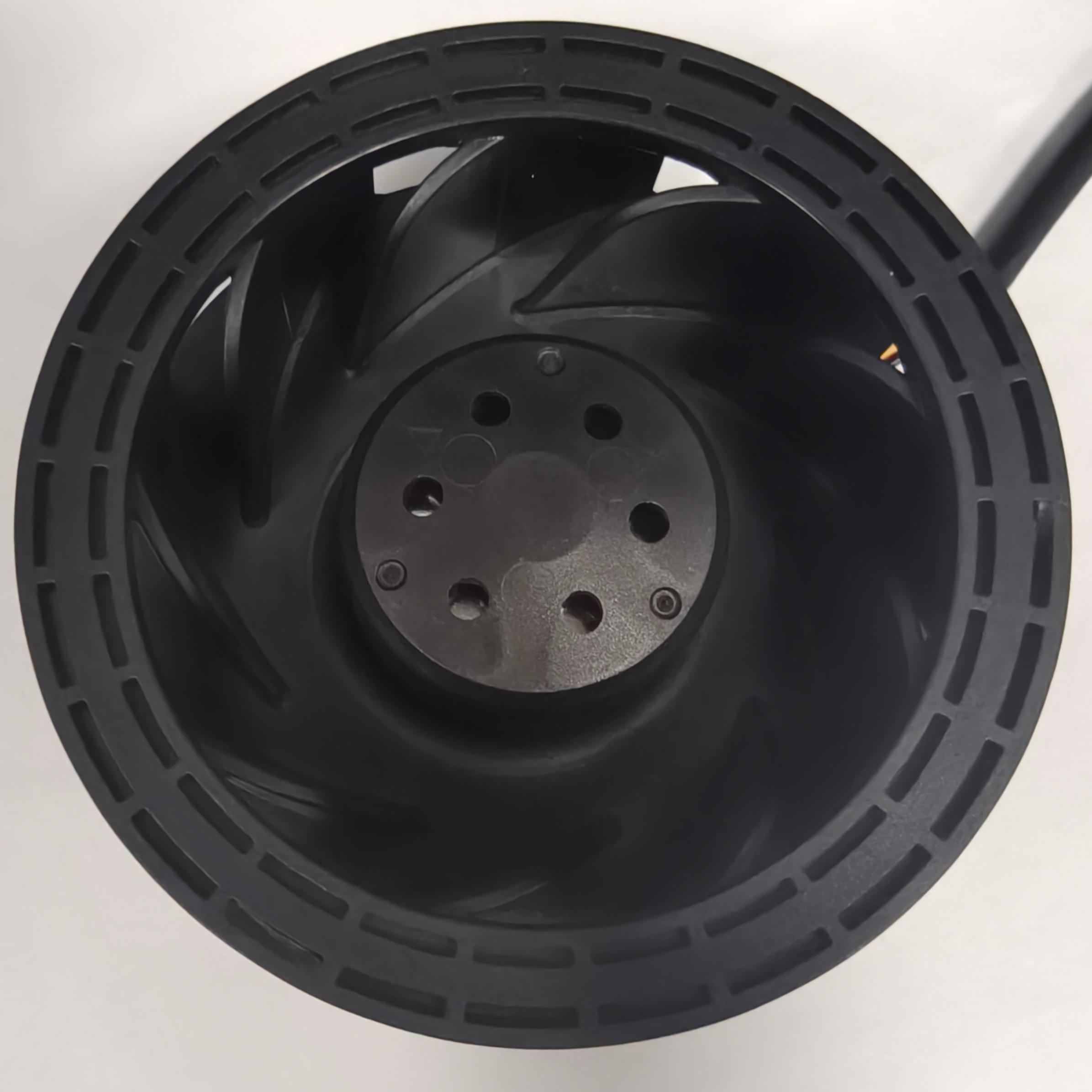
The impeller is a critical component in a centrifugal fan. Its geometry, dimensions, manufacturing consistency, and interaction with the housing all influence aerodynamic performance.
For air shower applications, selecting a fan based only on impeller size or motor power is insufficient. The complete fan performance curve should be evaluated to determine the airflow, static pressure, and power consumption available at the intended operating point.
Manufacturing consistency is equally important. Stable component quality and controlled assembly processes help reduce variation between units and provide a stronger foundation for repeatable performance in volume production.
A centrifugal fan operates with a rotating impeller. If the rotating assembly is unbalanced, it may generate additional vibration that can be transmitted through the fan mounting structure into the equipment enclosure.
Dynamic balancing is therefore an important consideration in the manufacturing and quality control of rotating components.
In an air shower, vibration may contribute to operating noise or be amplified by sheet-metal panels, mounting brackets, and duct structures.
However, dynamic balancing alone does not determine the overall noise level. Aerodynamic turbulence, impeller and housing geometry, motor operation, structural resonance, and nozzle design can also influence noise.
A proper evaluation should consider fan operating tests, the actual installation conditions, and vibration and noise measurements where necessary.
Industrial cooling fans should be evaluated not only by their individual performance specifications, but also by batch consistency, inspection procedures, and quality traceability.
JENTECH has manufacturing and testing capabilities supporting its cooling fan business and can provide product-related assistance based on the requirements of specific applications. For an individual centrifugal fan model, the applicable manufacturing processes, performance tests, and inspection standards should be confirmed according to the actual product series.
When assessing a supplier, equipment manufacturers should review:
Whether the product has clearly defined specifications and model identification
Whether the relevant performance curves and technical documentation are available
Whether testing and inspection procedures match the product requirements
Whether quality control supports consistent performance across production batches
Whether technical assistance is available when application issues arise
For air shower equipment intended for long-term operation, these factors are worth considering alongside the fan's initial performance.

A practical selection process should begin with the system requirements and proceed through resistance evaluation, fan screening, and equipment validation. Selecting a fan first and modifying the entire duct system afterward may create unnecessary design compromises.
| Selection Stage | Main Task | Key Information to Confirm |
|---|---|---|
| Step 1: Define airflow requirements | Review nozzle quantity and layout | Target total airflow and distribution requirements |
| Step 2: Evaluate system resistance | Assess filter, duct, and nozzle pressure losses | Required static pressure at the target airflow |
| Step 3: Shortlist candidate fans | Compare fan performance curves | Airflow, static pressure, power, and dimensions |
| Step 4: Check installation conditions | Verify fan and duct interfaces | Orientation, mounting, and maintenance clearance |
| Step 5: Validate the complete system | Test actual operating performance | Nozzle airflow distribution, noise, and power consumption |
| Step 6: Confirm volume-production requirements | Finalize the design based on test results | Model specification, control method, and quality requirements |
The number and diameter of the nozzles are only part of the airflow calculation. They are not sufficient on their own to determine the correct fan model. Nozzle flow characteristics, filter pressure drop, duct geometry, and the overall equipment design must also be considered.
Consider two hypothetical air shower systems with similar external dimensions but different internal layouts.
System A: A relatively short duct system with a simpler nozzle arrangement and lower overall resistance.
System B: A different filter and duct configuration, with additional local flow restrictions and higher overall system resistance.
Even if both systems require a similar total airflow, they may need different static pressure capabilities.
If the same fan is selected solely based on equipment dimensions or maximum airflow, one system may operate as intended while the other delivers insufficient airflow at the nozzles.
A better approach is to evaluate each system's resistance, compare it with the complete fan performance curve, and validate the final operating point through equipment testing.
This is an illustrative selection example, not measured data from a specific customer project. The final fan model should be determined using the actual equipment specifications and test results.
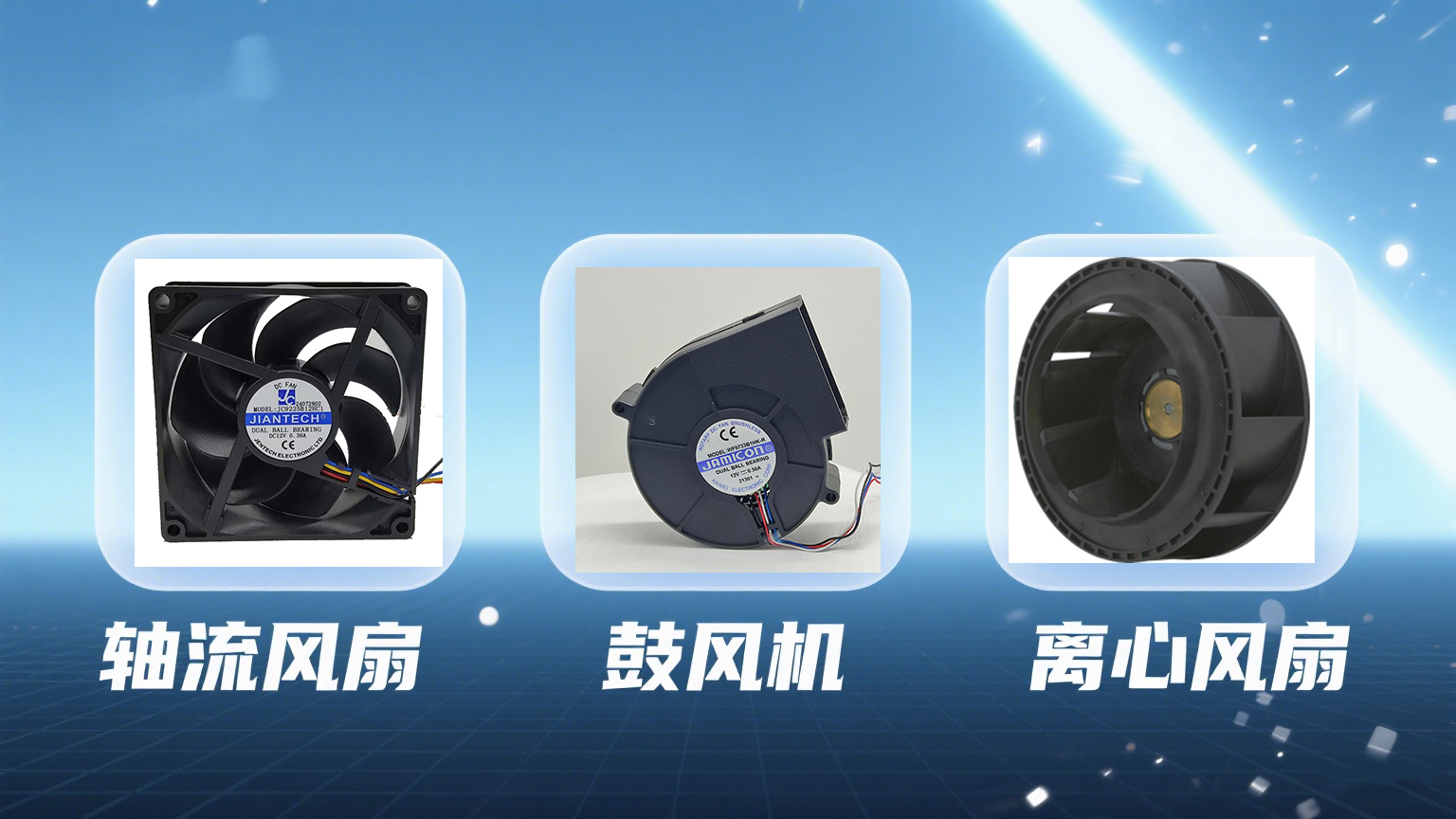
For air shower manufacturers, cleanroom equipment integrators, and industrial equipment developers, working with a source manufacturer can provide value beyond the fan itself. It can also support clearer communication about product specifications, manufacturing requirements, and application needs.
Shenzhen JENTECH Electronics Co., Ltd. specializes in industrial cooling solutions and provides cooling fan selection consultation and application support. For air showers and other filtered-air delivery systems, customers can discuss the following areas with JENTECH.
Product selection: Identify candidate fan models based on target airflow, system resistance, noise, and power requirements.
Structural compatibility: Confirm dimensions, mounting arrangements, inlet and outlet orientation, and duct interfaces early in the design process.
Performance validation: Use fan performance curves and complete-system testing to evaluate actual operating conditions.
Volume supply: Review specification consistency, quality-control procedures, and ongoing supply requirements.
Technical support: Discuss application challenges during equipment development, prototype testing, and production introduction.
JENTECH is also a distributor of SANYO DENKI San Ace cooling fans from Japan and has received the “2023 Best Sales Award” and the “2024 Outstanding Sales Award.” With a stable supply chain from the original manufacturer and professional technical support, JENTECH provides product consultation and selection assistance for relevant San Ace products.
JENTECH's own manufacturing capabilities and its distribution business for San Ace products are distinct aspects of its business. The brand, model, specifications, and manufacturing origin should be confirmed for each specific project.
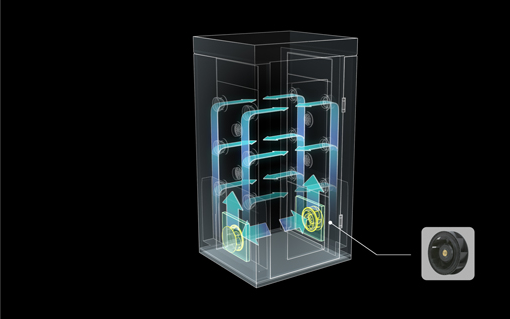
The airflow performance of an air shower nozzle duct system depends on the interaction between fan characteristics, filter resistance, duct geometry, and nozzle arrangement.
For equipment manufacturers, a sound selection process starts with the required airflow and static pressure. Candidate fans should then be evaluated using their performance curves, followed by complete-system testing to verify airflow distribution, noise, and power consumption.
Manufacturing capabilities and technical support—from tooling and structural compatibility to impeller quality, dynamic balancing, production testing, and quality control—can provide an important foundation for product development and volume supply.
Shenzhen JENTECH Electronics Co., Ltd. specializes in cooling fans and industrial thermal management solutions, offering product selection consultation and application support for equipment manufacturers.
If you are developing air showers, cleanroom equipment, or other air delivery systems that must overcome filter and duct resistance, contact JENTECH to discuss your equipment structure, target airflow, required static pressure, installation space, and noise requirements. The team can help evaluate suitable centrifugal fan products and application solutions based on your project needs.
Contact:
Phone: 13322980502
Tel: 0755-23706799
Email: hxp@jentech.cn
Add: