Welcome:
Language:
 ∷
∷

∷
 ∷
∷

If an electronic device is compared to a system that needs to operate continuously, its power supplies, PCBs, power components, control modules, and other electronic components can be regarded as its continuously working “organs.”
As these components operate, they inevitably generate heat.
If this heat cannot be removed effectively, it can accumulate inside the equipment and gradually deteriorate the thermal environment.
That is why a cooling fan is not simply a component that “spins.”
A reliable cooling system needs to continuously, efficiently, and stably remove heat from the equipment.
This is why JEANTECH DC Cooling Fans can be described, metaphorically, as a:
“Dialyzer” for electronic systems.
Of course, a cooling fan does not perform dialysis in the medical sense. Here, “Dialyzer” is simply an engineering analogy for the continuous removal of an unwanted burden from a system.
The logic can be summarized as:
Continuous operation → Continuous heat generation → Continuous airflow → Continuous heat removal → More stable equipment operation
The kidneys play an important role in filtering the blood and removing metabolic waste from the human body.
When kidney function is severely impaired, dialysis can be used to help remove certain waste products and excess fluid from the blood.
Electronic equipment has no biological metabolism, but its components generate another type of burden that must be managed:
This is particularly important in equipment such as:
| Equipment | Typical Heat Sources |
|---|---|
| Energy Storage PCS | Power devices, IGBTs/MOSFETs, power modules |
| EV Charging Equipment | Power modules, rectifiers, control circuits |
| Inverters | Power semiconductors, capacitors, inductors |
| UPS Systems | Power modules and power supplies |
| AI Servers | CPUs, GPUs, memory, and power systems |
| Laser Equipment | Drivers, power supplies, and control modules |
| Medical Equipment | Power supplies, control boards, and electronic components |
| Communication Equipment | Chips, switching modules, and power modules |
During high-load or long-term operation, these components continuously generate heat.
Therefore, equipment cooling is not simply:
“Start cooling when the temperature becomes high.”
It is:
“When the equipment operates, heat management should operate with it.”
This is one of the fundamental roles of a DC cooling fan.

It is easy to think of a cooling fan in a simple way:
Fan rotates → Air moves → Heat is removed.
In actual engineering applications, however, the cooling process is much more complex.
A typical forced-air cooling process can be understood as:
Electronic components generate heat
↓
Heat is transferred to a heat sink or surrounding structure
↓
Air passes through the heated area
↓
The fan drives continuous airflow
↓
Hot air is carried away from the heat source
↓
Relatively cooler air enters the equipment
↓
Continuous air circulation is established
Therefore, the real role of the fan is to:
Transfer and carry heat away from the equipment.
From this perspective, the “Dialyzer” analogy becomes easier to understand.
The heat does not simply disappear.
Instead, it is continuously transferred away from the heat source and discharged from the equipment.
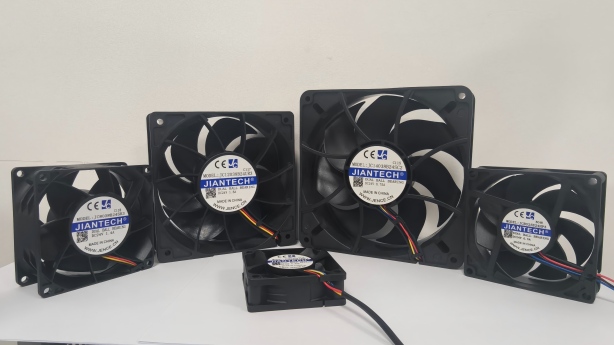
This is one of the most common issues during the early stage of cooling fan selection.
A customer may initially say:
“We need an 80 × 80 mm fan with high airflow.”
But once the project enters the engineering stage, many more questions arise:
How much airflow resistance does the system have?
Does the heat sink create additional resistance?
Is there a filter?
How much installation space is available?
What temperature rise is acceptable?
What is the maximum allowable noise level?
How long will the equipment operate each day?
What is the ambient temperature?
Therefore, fan selection should consider multiple parameters:
| Parameter | Why It Matters |
|---|---|
| Airflow | Determines the amount of air moved per unit of time |
| Static Pressure | Determines the fan's ability to overcome system resistance |
| Speed | Influences airflow, static pressure, and noise |
| Power Consumption | Affects overall equipment energy consumption |
| Noise | Affects the user experience of the final equipment |
| Vibration | Can affect long-term equipment stability |
| Service Life | Influences maintenance and replacement costs |
| Operating Temperature | Determines environmental adaptability |
| Protection Performance | Important for dust, moisture, oil, and other conditions |
Therefore:
And:
Effective fan selection should always consider the fan together with the entire airflow path and thermal design of the equipment.
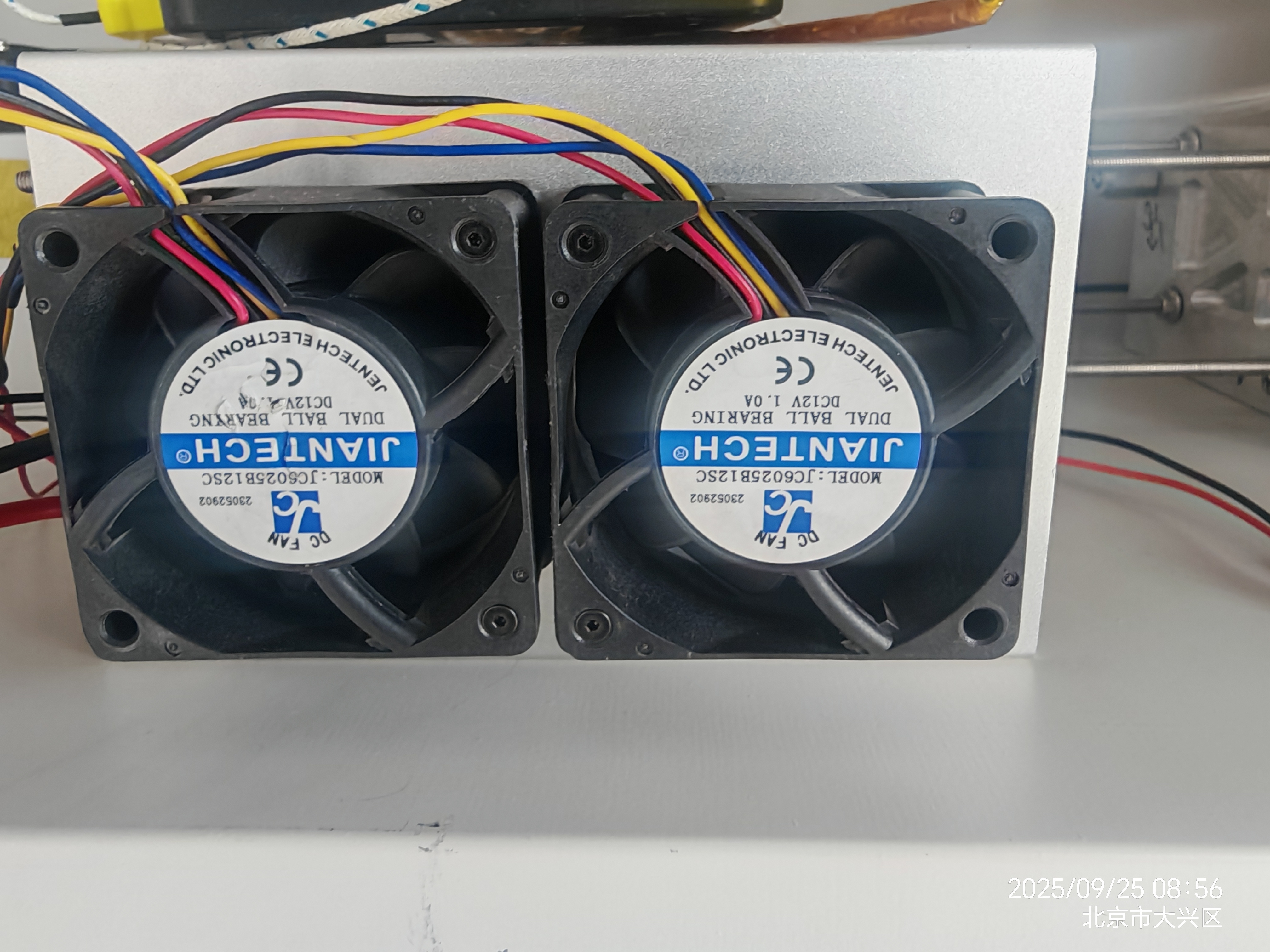
Take the JEANTECH JC8025 series 80 × 80 × 25 mm DC axial fans as an example.
The series uses PBT 94V-0 materials for the impeller and frame and features double ball bearings. The specified operating temperature range is -20°C to +70°C.
However, even after the equipment designer determines that the installation space is:
80 × 80 × 25 mm
the selection process is not finished.
The JC8025 series includes different performance levels.
| JC8025 Series | Speed Range | General Performance Focus |
|---|---|---|
| JC8025-01 | 3,000–6,400 RPM | Suitable for applications balancing cooling, noise, and power consumption |
| JC8025-02 | 5,200–8,800 RPM | Designed for higher airflow and higher static pressure requirements |
| JC8025-03 | 4,600–7,800 RPM | Provides another performance balance between airflow, pressure, and noise |
This demonstrates an important engineering principle:
Determining the fan size is only the first step. Determining the required operating point is the real selection process.
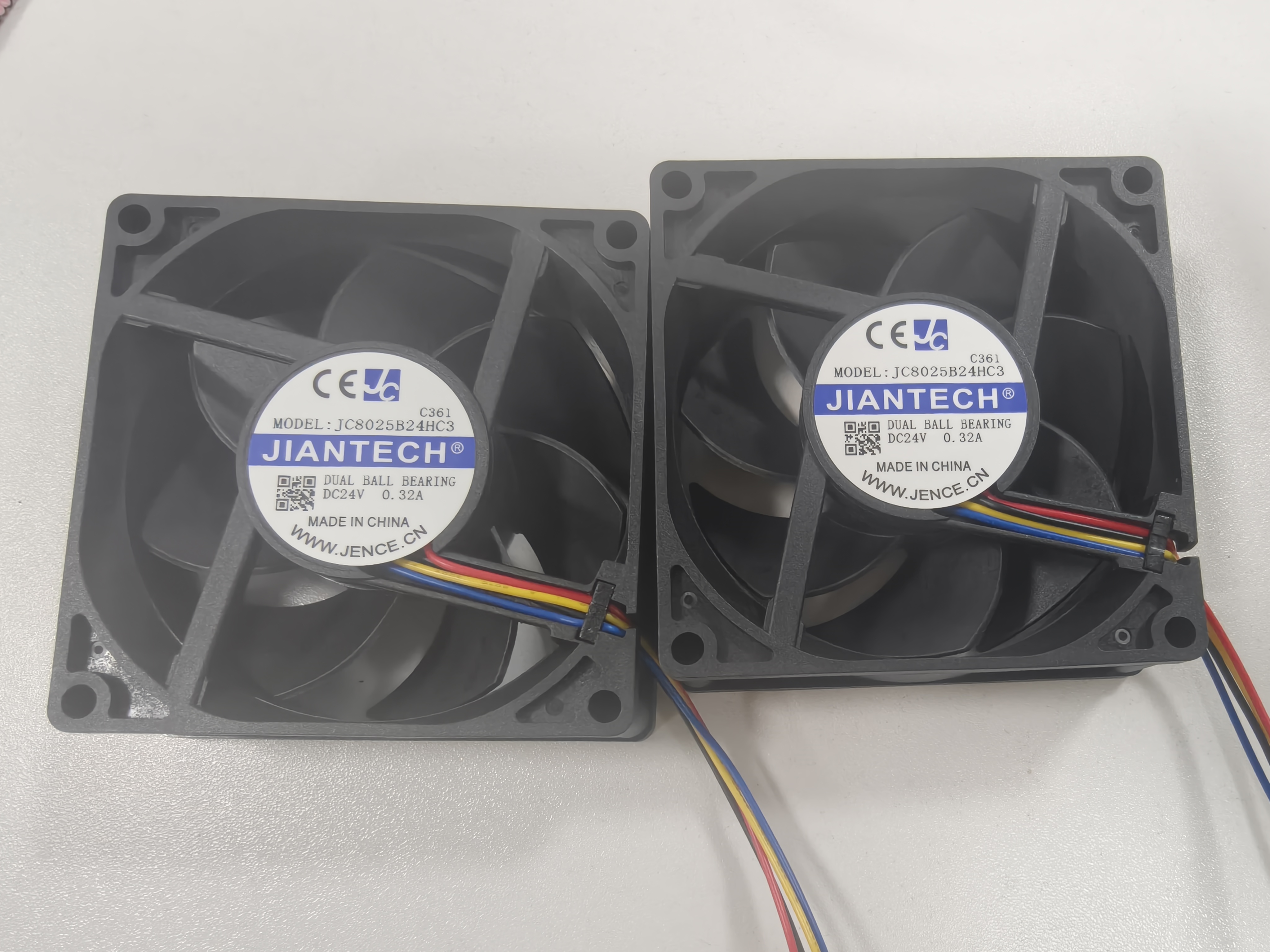
Suppose a medical device uses an 80 × 80 × 25 mm fan and has the following requirements:
① Electronic components operate continuously
② Operating noise needs to be controlled
③ The airflow resistance is relatively moderate
④ Cooling performance and power consumption both need to be considered
In such a case, the JC8025-01 series could be considered as one possible starting point for engineering evaluation.
For example:
| Parameter | Reference Value |
|---|---|
| Size | 80 × 80 × 25 mm |
| Rated Voltage | 12 V |
| Speed | 3,000 RPM |
| Airflow | 38.7 CFM |
| Static Pressure | 0.141 inchH₂O |
| Power Consumption | 0.8 W |
| Noise | 32.1 dBA |
If the equipment has a more restrictive airflow path and requires greater static pressure capability, the JC8025-02 series may be considered for further evaluation.
For example:
| Parameter | Reference Value |
|---|---|
| Size | 80 × 80 × 25 mm |
| Rated Voltage | 12 V |
| Speed | 5,200 RPM |
| Airflow | 45.9 CFM |
| Static Pressure | 0.386 inchH₂O |
| Power Consumption | 3.13 W |
| Noise | 43.7 dBA |
The difference between these two examples is clear:
JC8025B12L-1: 32.1 dBA / 0.141 inchH₂O
JC8025B12L-2: 43.7 dBA / 0.386 inchH₂O
The second model provides higher static pressure capability, while its speed, power consumption, and noise level are also higher.
The model with the highest specification is not necessarily the best choice.
The objective is to find the right balance for the actual equipment.
Note: The above JC8025 models are provided as examples to illustrate the fan selection process. They do not indicate that a specific model has been certified or finally qualified for a particular Dialyzer or medical device. Actual selection should be verified according to the equipment's thermal load, airflow resistance, target temperature rise, noise requirements, installation conditions, and applicable product requirements.
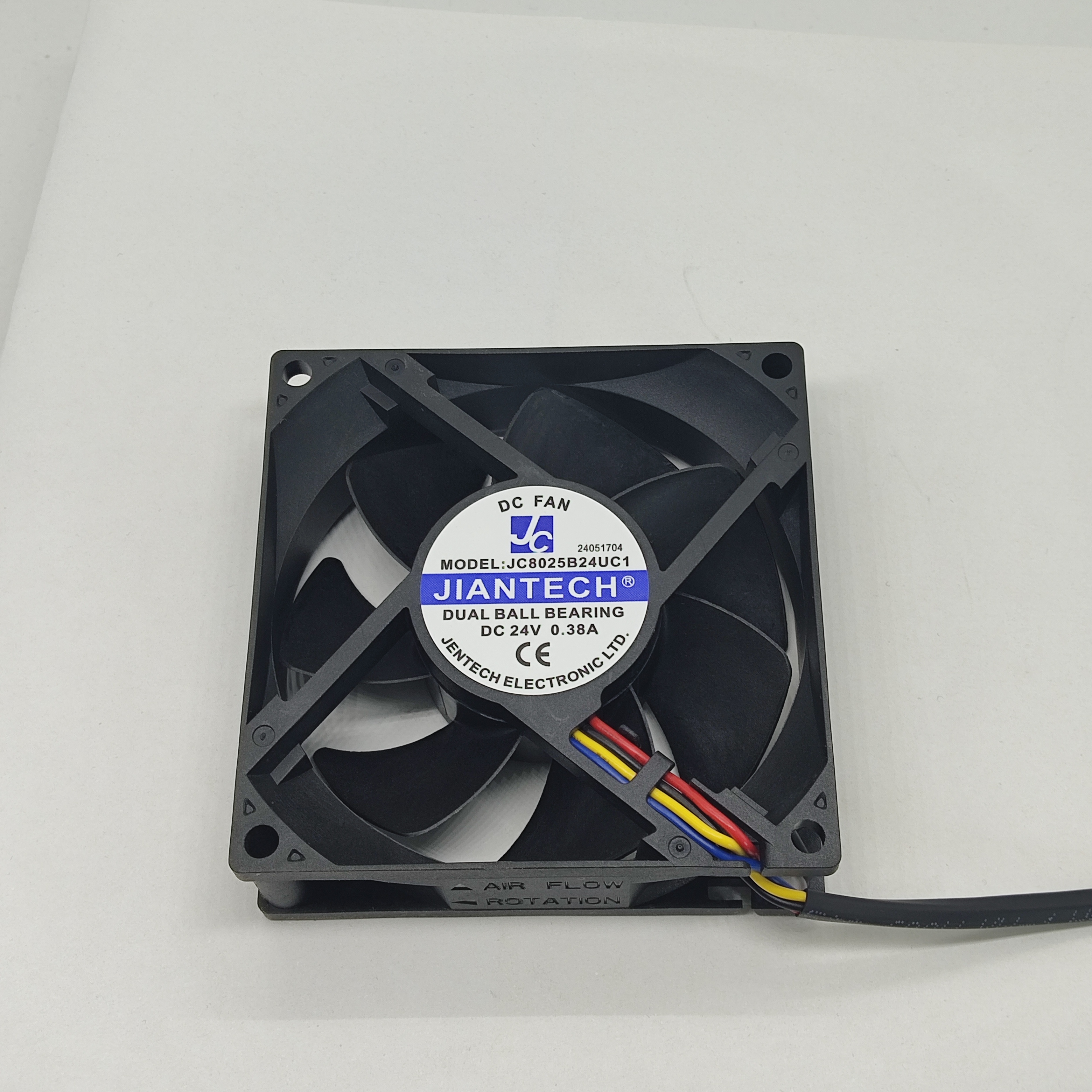
If airflow determines whether a cooling system can provide sufficient cooling capacity, noise can determine whether the cooling solution is acceptable for long-term use.
This is particularly important for:
Medical equipment
Communication equipment
Office equipment
Service robots
Residential equipment
Other noise-sensitive applications
Fan noise can originate from several factors, including:
Aerodynamic noise generated by the impeller
Motor noise
Mechanical vibration
Structural resonance
Airflow turbulence within the equipment
Therefore, simply increasing fan speed to obtain more airflow is not always the best solution.
This is why low-noise cooling is an important development direction for JEANTECH products.
For end equipment, the ideal cooling fan is not necessarily:
The louder, the stronger.
Instead, it should aim to:
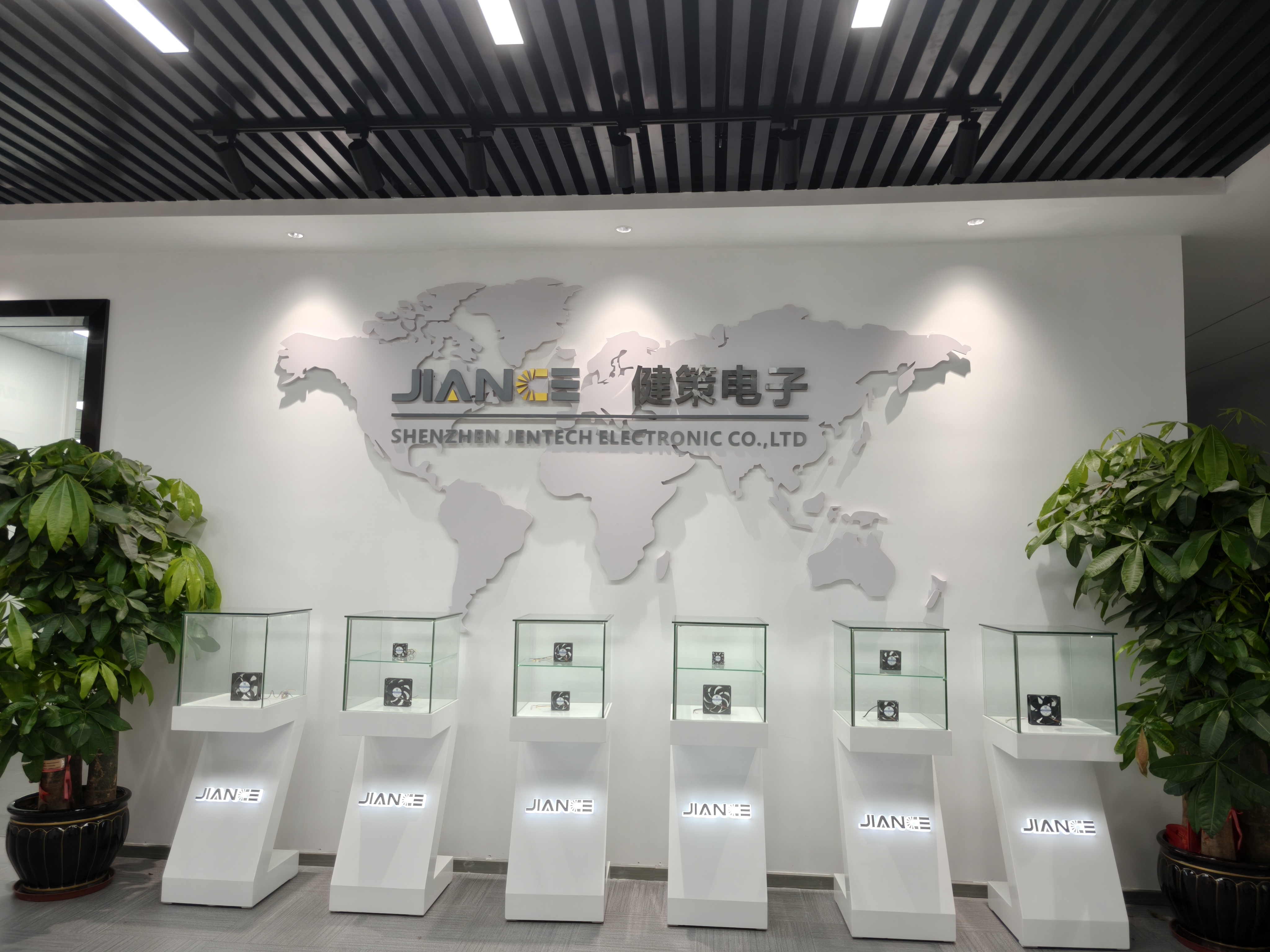
Shenzhen JENTECH Electronics Co., Ltd. was established in September 2010 in Longhua, Shenzhen, China.
The company has been deeply engaged in the cooling fan industry for 16 years and follows a dual-track strategy combining:
International Brand Distribution + Independent R&D and Manufacturing
The JEANTECH brand focuses on independent product development and customized cooling solutions.
For quiet cooling applications, JENTECH has dedicated noise testing capabilities and combines precision manufacturing processes such as automatic dynamic balancing calibration to help control operating noise and product consistency.
For end equipment, the goal of a cooling fan should not simply be:
“The fan is powerful enough.”
It should also be:
An electronic system may contain dozens or even hundreds of electronic components.
A failure in a critical component can affect the operation of the entire system.
The cooling system plays an important role in maintaining the thermal environment around these components.
This makes cooling fan reliability particularly important for equipment that operates for extended periods, such as:
Energy storage systems
EV charging equipment
Industrial power supplies
UPS systems
Communication equipment
Servers
Medical equipment
Industrial automation equipment
For customers:
Fan failure ≠ Only a failed fan.
It may potentially lead to:
Reduced cooling capacity
↓
Higher internal temperature
↓
Component thermal stress
↓
Protection, derating, or equipment shutdown
↓
Maintenance requirements
↓
Higher service costs
↓
Impact on the end user's experience
Therefore, cooling fan reliability is ultimately connected to:
A cooling fan should not be considered qualified simply because it rotates after production.
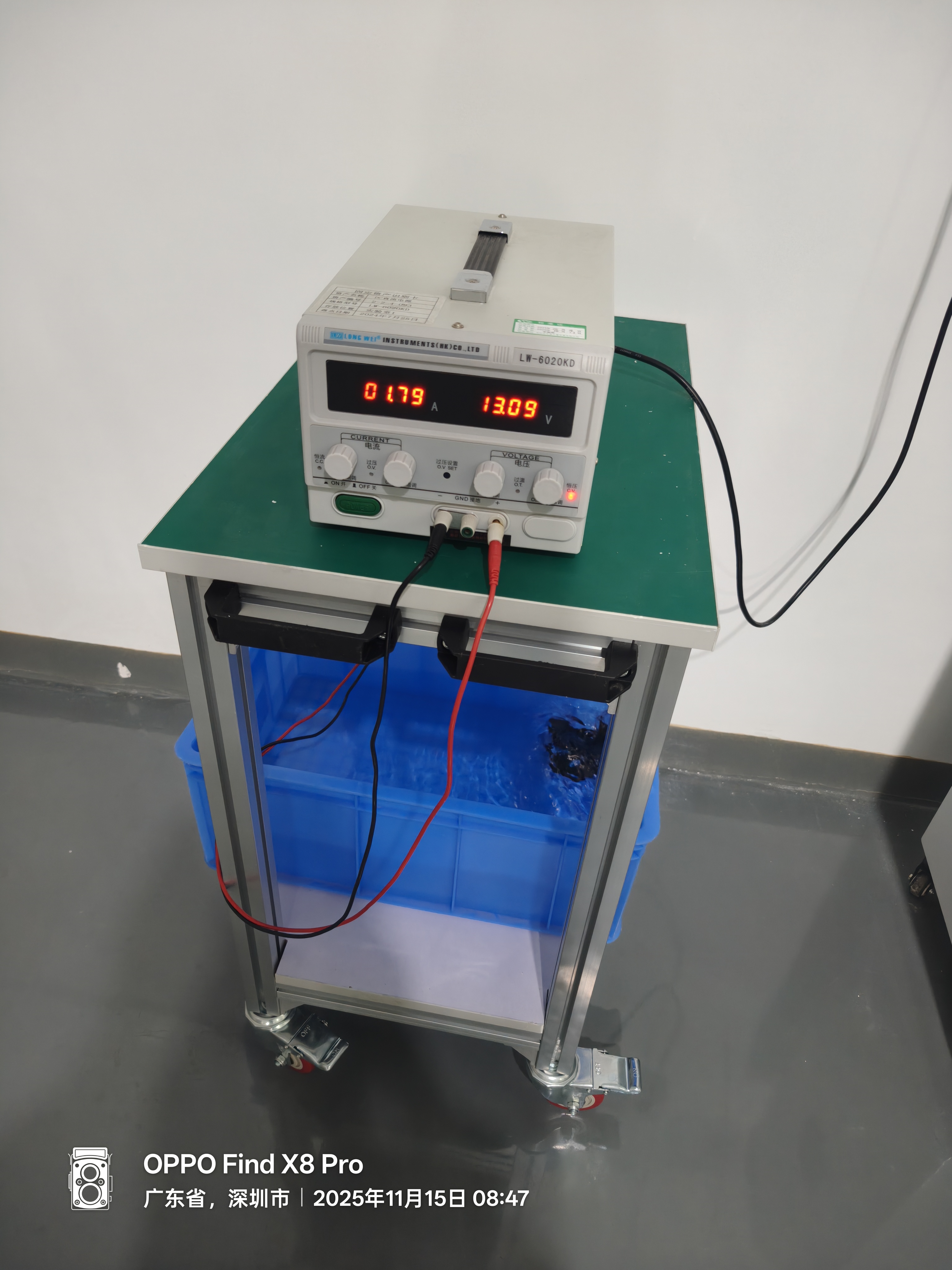
JEANTECH conducts product testing according to applicable industry standards and maintains testing capabilities covering areas such as temperature cycling, high/low-temperature performance, water and dust resistance, and noise.
Key testing directions include:
| Test / Capability | Main Focus |
|---|---|
| High/Low Temperature Testing | Performance under different temperature conditions |
| Thermal Shock Testing | Adaptability to rapid temperature changes |
| Water Resistance Testing | Performance in humid or water-exposure conditions |
| Dust Resistance Testing | Adaptability to dusty environments |
| Noise Testing | Acoustic performance during operation |
| Dynamic Balancing | Reduction of vibration caused by rotating imbalance |
The objective is simple:
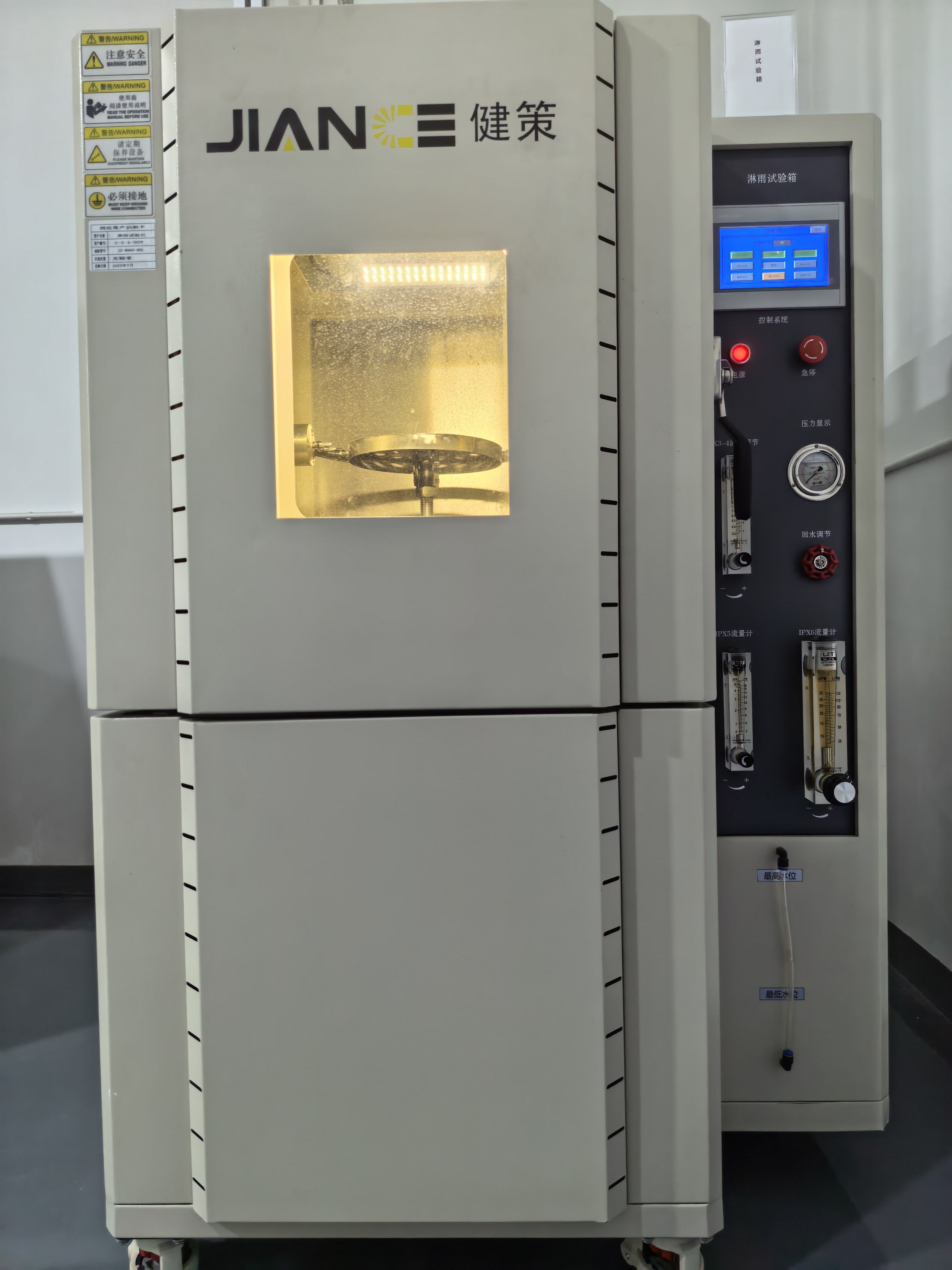
Actual equipment environments are much more complicated than laboratory conditions.
Industrial sites may contain dust.
Outdoor charging equipment may be exposed to rain and moisture.
New-energy equipment may operate under wide temperature fluctuations.
Certain industrial environments may also involve oil mist or corrosive conditions.
Therefore, cooling fans should be selected according to the actual operating environment.
JEANTECH products can be developed with corresponding protection capabilities according to project requirements, including products associated with IP67/IP54 protection levels and relevant product certifications.
A higher IP rating is not automatically better.
The protection level should match the actual application environment.
For example:
Indoor electronic equipment
may prioritize:
Low noise + Low power consumption + Reliability
while:
Outdoor new-energy equipment
may additionally require:
Water resistance + Dust resistance + Long service life + Environmental adaptability
The correct fan selection starts with understanding the real operating conditions.
Different equipment has different dimensions, heat loads, and airflow paths.
JEANTECH provides a broad cooling product portfolio, including:
Available in multiple frame sizes from approximately 30 mm to 280 mm.
Typical applications include:
Industrial control equipment
Communication equipment
Power supplies
Energy storage systems
Inverters
Medical equipment
Servers
Suitable for applications requiring directional airflow, space-constrained installation, or specific airflow path designs.
Suitable for applications requiring specific airflow management and higher pressure-oriented airflow solutions.
Therefore, “cooling” does not always mean using a conventional axial fan.
The fan type should be selected according to the equipment structure and thermal design.
JEANTECH cooling products can be applied across a wide range of industries and equipment.
| Industry | Typical Equipment | Common Fan Sizes |
|---|---|---|
| New Energy | Energy storage cabinets, PCS, inverters, EV chargers | 4020, 6025, 8025, 8038, 9225, 9238, 12038, etc. |
| Power Quality | APF, SVG | 8025, 8038, 9238, 12038, etc. |
| Medical | Oxygen concentrators, medical instruments | 4015, 4020, 8025, 9225, 9733, etc. |
| Industrial Automation | Inverters, servo systems | 6025, 8025, 8038, 9238, 12038, etc. |
| Servers & Communications | AI servers, communication servers, switches | 4028, 6025, 8025, 8038, 8058, 9238, 12038, etc. |
| Laser Equipment | Laser welding equipment, LiDAR | 4020, 6025, 8025, 8038, 9238, 17251, etc. |
| Robotics | Robot controllers, garden robots, cleaning robots | 3010, 6025, 8020, 8025, 9225, 12038, etc. |
| Lighting & Advertising | LED lighting, stage lights, LED displays | Multiple sizes from 3010 to 14025 |
From compact electronic equipment to large industrial systems, the cooling solution can be selected according to the specific thermal requirements.
When selecting cooling fans, customers often consider alternatives to imported products.
However, a meaningful replacement is not simply:
“Find a fan with the same dimensions and offer it at a lower price.”
Engineering-level replacement should consider:
Dimensional compatibility
Airflow compatibility
Static pressure compatibility
Noise performance
Power consumption
Mounting requirements
Service life and reliability
Control and sensing functions
The final goal is:
This is what meaningful domestic replacement should achieve.
With independent R&D and manufacturing capabilities, JEANTECH can provide differentiated product development and customization based on customer equipment requirements rather than simply offering the closest standard model.
Real-world projects often encounter situations such as:
The equipment has already been designed
but:
A standard fan does not fit.
Or:
The fan fits physically, but airflow is insufficient.
Or:
Cooling performance is sufficient, but the noise level exceeds the equipment requirement.
In such cases, simply selecting the closest catalog model may not solve the engineering problem.
JEANTECH can support projects through a service process covering:
Thermal Diagnosis → Collaborative Design → Product Development → Testing & Validation → Mass Production
This provides an integrated approach to cooling fan development.
JEANTECH's stated R&D cycle can be controlled within 30 days, with urgent order response within 48 hours, while the on-time delivery rate for engineering projects reaches 98.6%.
For industrial equipment, new-energy products, and other rapidly evolving applications, response speed can also become an important part of supply-chain competitiveness.
Product development is only the first step.
If product consistency cannot be maintained during mass production, even a well-designed product may struggle to deliver stable performance in the field.
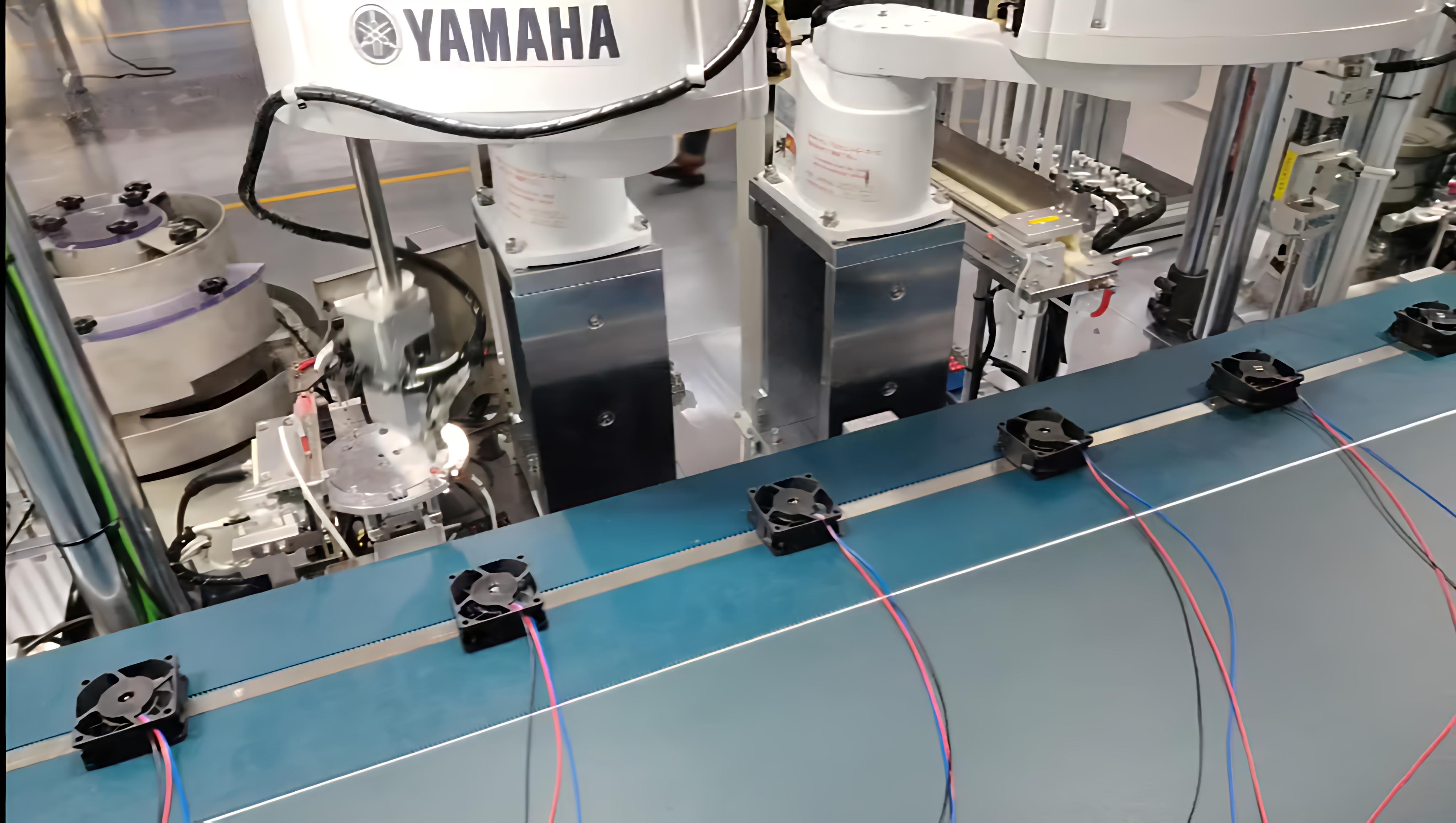
JEANTECH operates a 3,000+ m² intelligent manufacturing workshop equipped with:
Automatic coil winding machines
Automatic dynamic balancing calibration equipment
Automatic assembly lines
Automatic coding and labeling equipment
The company also applies QR-code-based production traceability to strengthen process management and product tracking.
From:
Raw Materials → Manufacturing → Testing → Product → Delivery
the production process is managed with an emphasis on standardization, automation, and traceability.
This is an issue that is often underestimated during equipment procurement.
Suppose two cooling fans differ in price by only a small amount.
It may be tempting to think:
“Let's just choose the cheaper one.”
But if a fan fails during equipment operation, the resulting cost can be much higher than the price difference between the fans.
For example:
Fan abnormality
↓
Reduced cooling capacity
↓
Higher internal temperature
↓
Protection, derating, or shutdown
↓
On-site maintenance
↓
Labor + Logistics + Downtime Costs
↓
Impact on the end customer
Therefore, in industrial equipment:
A better approach is to consider:
Total lifecycle cost.
This may include:
Purchase cost + Energy consumption + Maintenance + Failure risk + Service cost + Brand impact
Let's return to the analogy at the beginning.
A Dialyzer uses a specialized process to help remove certain waste products from blood.
A DC cooling fan does not literally “filter” heat from electronic equipment.
Instead, it continuously drives airflow to transfer heat away from internal components.
Therefore, it can be better understood as:
It does not perform the primary function of the equipment.
But it can influence the operating environment of critical components.
It does not create the equipment's core performance.
But it can contribute to the equipment's ability to operate reliably over time.
It may not be the most visible component in the system.
But it can be an important part of long-term thermal management.
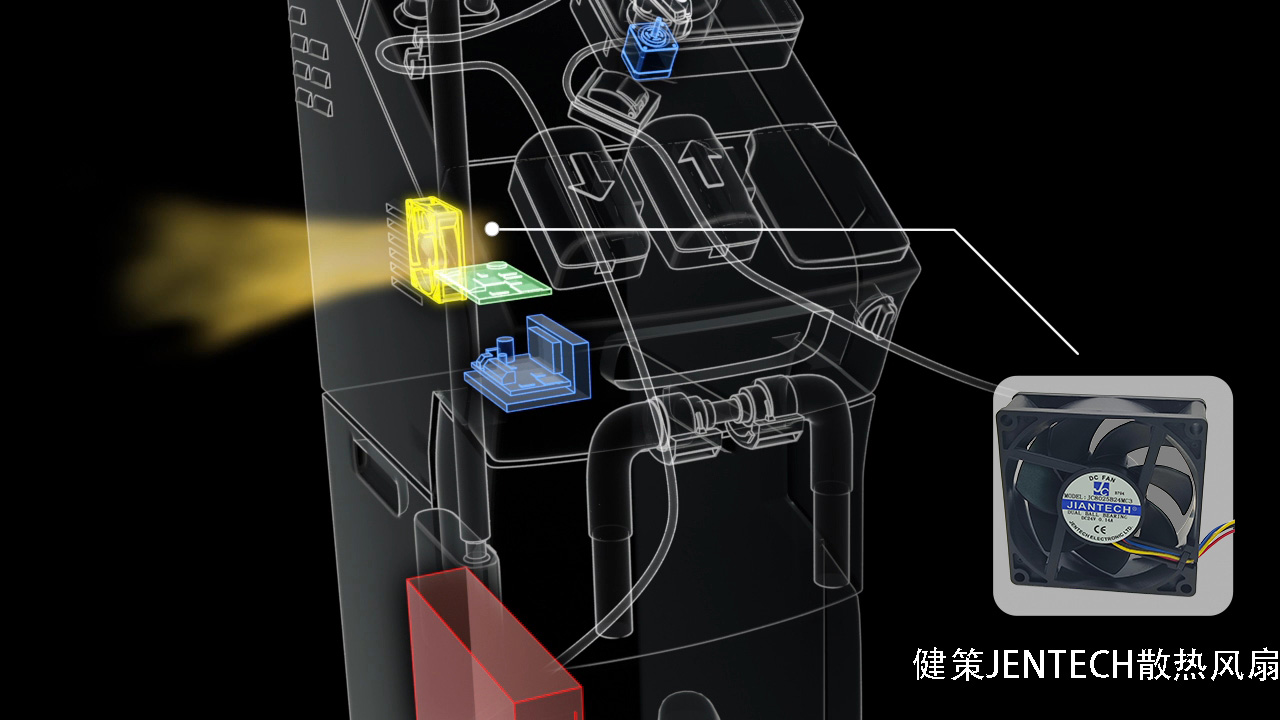
From energy storage cabinets and EV chargers to inverters, UPS systems, servers, medical equipment, industrial robots, and laser equipment, whenever electronic components operate continuously, heat is generated continuously.
The role of the cooling system is to provide that heat with a reliable path out.
JEANTECH DC Cooling Fans focus on low-noise operation, reliability, low power consumption, and flexible customization. The company's product portfolio covers axial fans, blowers, and centrifugal fans, supporting cooling requirements across industrial, medical, new-energy, communication, and other applications.
Shenzhen JENTECH Electronics Co., Ltd. follows the mission:
Solve Cooling Bottlenecks, Drive Technological Innovation.
From a single cooling fan to a complete cooling solution;
From standard products to customized designs;
From manufacturing to thermal diagnosis, collaborative design, and responsive delivery.
JEANTECH aims to provide more than simply a cooling fan.
The goal is to help every continuously generated unit of heat find:
A path to escape, an airflow to follow, and a system to manage it.
Ultimately, equipment operating under high-load and long-duration conditions can achieve a more balanced combination of:
Quietness + Stability + Reliability + Effective Cooling.
Contact:
Phone: 18124620466
Tel: 0755-23706799
Email: yq@jentech.cn
Add: